Workforce & Jobs
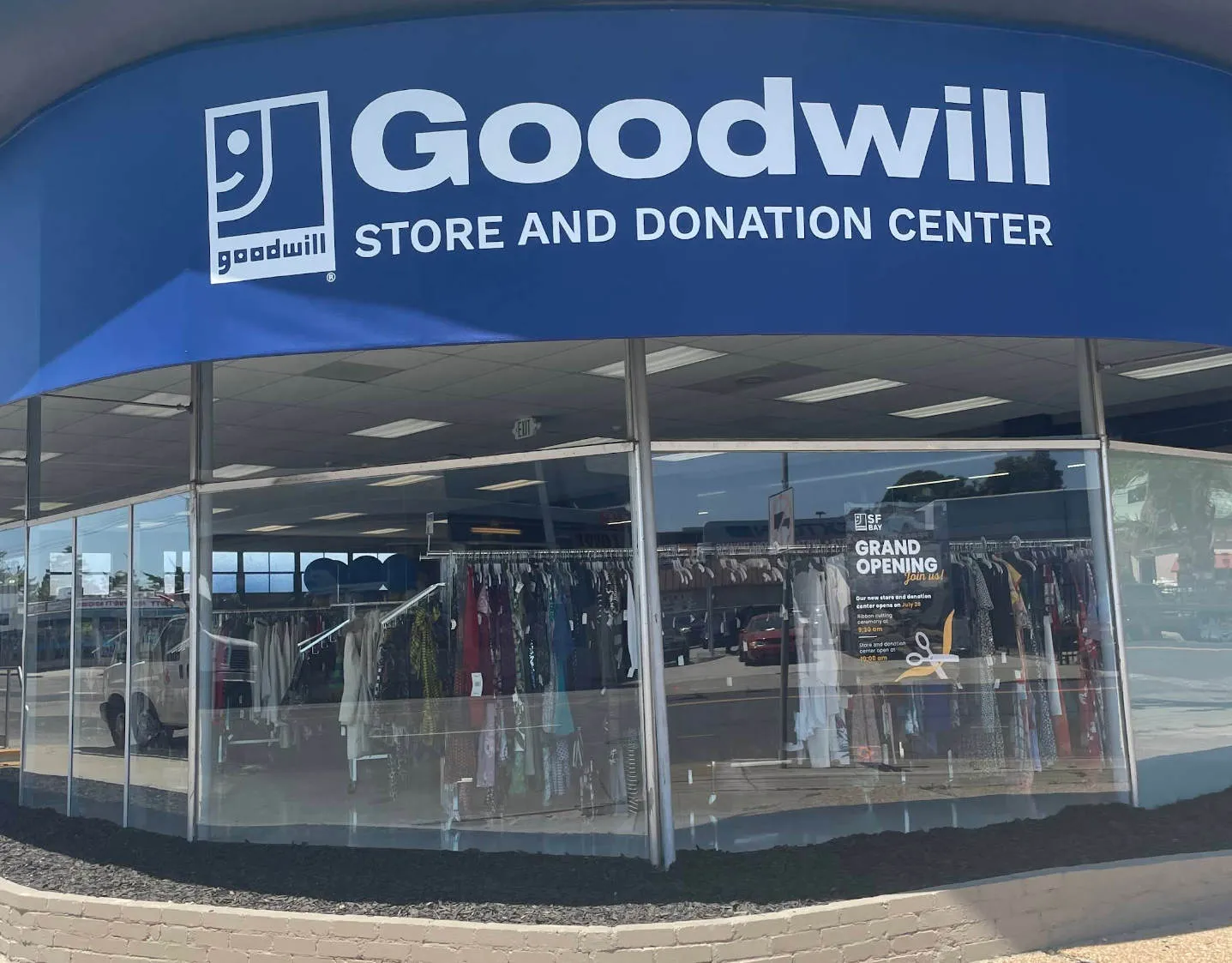
Goodwill
Goodwill Car Donation accepts vehicles in any condition — proceeds fund job training and employment placement programs in your community.
location_on2850 College Dr, Rice Lake, WI 54868call(715) 236-2907
Selling a used car in Rice Lake can mean weeks of listings and lowball offers. Donating it takes one phone call. Vetted charities accept vehicles directly, schedule a free tow, and mail an IRS Form 1098-C for the donor's records.
Barron County
County
9,030
Residents
Skip the listings. Get the tax write-off and free towing — our charity of the week handles the rest.
Charities that accept vehicles routinely take cars that do not start, salvage-title vehicles, and aging junk cars. Condition affects value, not eligibility.
Every charity listed for Rice Lake is a pre-screened, IRS-qualified public charity that accepts vehicle donations.
A Rice Lake private sale can drag on for weeks. A vehicle donation moves quickly: a short form, a scheduled tow, and a signed title at pickup.
Vehicle donations routed to MatchingDonors.com receive prioritized handling — free towing, title transfer, and IRS Form 1098-C after the vehicle sells. Proceeds fund the matching platform that has connected over 15,000 registered donors with patients in need.
See how much your car could impact a charity.
Well-known 501(c)(3) charities serving Rice Lake — local branches plus national organizations that accept car donations.
Goodwill Car Donation accepts vehicles in any condition — proceeds fund job training and employment placement programs in your community.
Accepts car, truck, motorcycle, RV, and boat donations — proceeds fund disaster response, blood services, and emergency aid nationwide.
Their Cars for Homes program accepts donated vehicles in any condition — proceeds fund home builds and repairs for families working toward stable homeownership.
Their Cars for a Cure program accepts vehicle donations with free towing — proceeds fund cancer research, patient transportation, and lodging programs.
Local YMCAs accept donated cars, trucks, and boats — proceeds fund youth programs, fitness scholarships, and community services in your neighborhood.
For most donated cars, the deductible amount is whatever the charity nets when it sells the vehicle, reported to the donor on IRS Form 1098-C. If the vehicle sells for $500 or less, the donor may generally deduct the lesser of $500 or fair market value without a 1098-C.
Vehicles the charity puts to direct use rather than selling have different rules and may support a fair-market-value deduction. This is general information, not tax advice — confirm the specifics with a tax advisor.
A transparent, four-step process ensures a smooth transition from vehicle to impact. (The exact process may differ between organizations, these are the general phases)
Your charity will conduct a preliminary assessment of your vehicle's market value and suitability for donation.
Their team verifies clear title, runs the vehicle history, and prepares all necessary transfer paperwork.
The title is officially transferred to the charity. You receive IRS Form 1098-C for tax deduction purposes.
The vehicle is sold or put to use by the charity, and proceeds fund their mission.
Vehicle donation is not limited to running passenger cars. Pickup trucks, SUVs, minivans, motorcycles, RVs, boats on trailers, and even snowmobiles and ATVs are accepted by 501(c)(3) charities serving Rice Lake.
Non-running vehicles, salvage-title cars, and vehicles with cosmetic damage routinely qualify. Title questions and mechanical condition are worked through when the tow is scheduled rather than used as a reason to turn the vehicle away upfront.
Straight answers on donating your car, the tax treatment, and what to expect.
No. Charities that accept vehicle donations routinely take cars that do not start, have body damage, or are mechanically worn out. Condition affects the eventual sale value — and therefore the deduction — but not eligibility.
No. A pickup request is informational and carries no cost or obligation. The donor can review the details and decline at any point before the title is signed over.
It depends on the state. Some states require the donor to remove plates before pickup and return them to the DMV; others transfer plates with the vehicle. The receiving charity and the state DMV can confirm the local rule.
Form 1098-C is the IRS document a charity sends to a donor after a vehicle donation. For a deduction over $500, the donor attaches Copy B of Form 1098-C (or a Form 1098-C substitute) to the tax return. For a deduction of $500 or less, the form is not required.
For a low-value, non-running, or unwanted vehicle, the time and cost of a private sale often eat into the proceeds. A donation skips the sale entirely, includes free towing, and produces a documented deduction — usually the simpler route for vehicles the donor would rather not market.
Salvage-title and non-operational vehicles are often accepted. The receiving charity will confirm based on the title status and the vehicle's location; non-running vehicles are typically picked up by flatbed at no cost to the donor.
Find vetted real-estate-accepting charities elsewhere in the country.